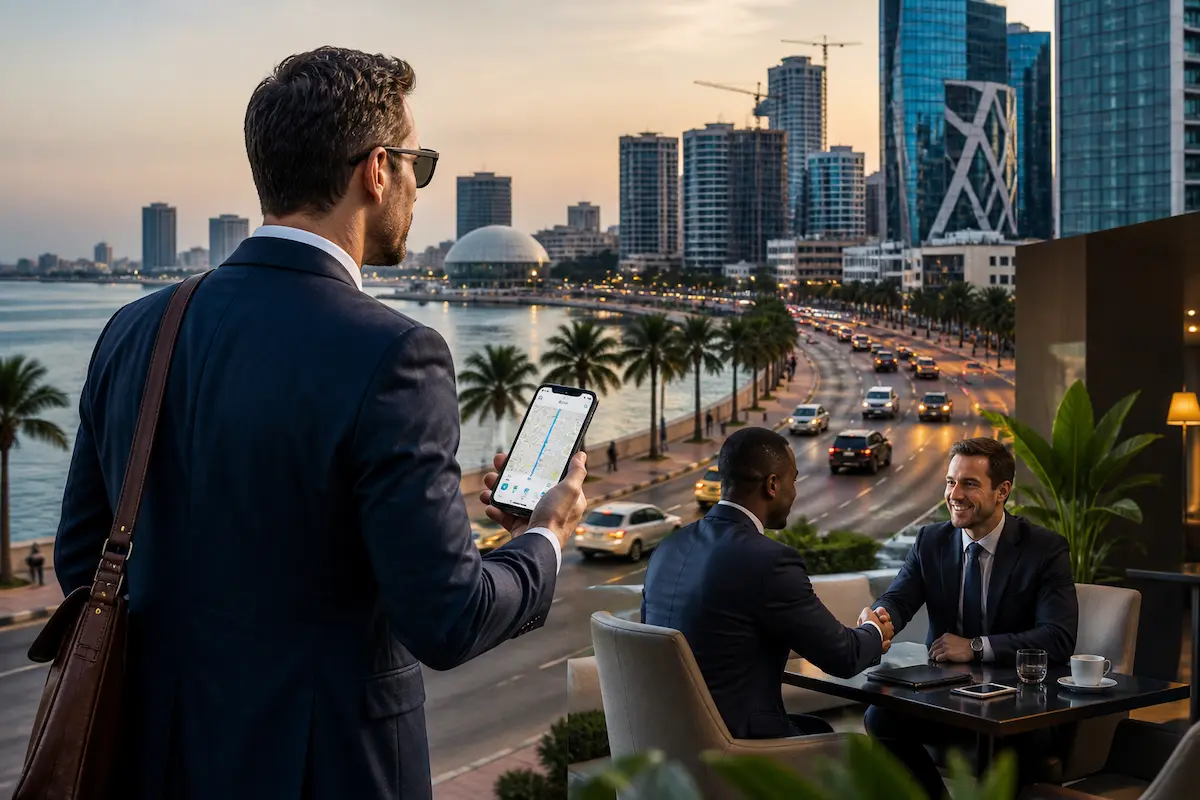
The Digital Toolkit: Ride-Hailing and Navigation
In 2026, getting around Luanda has become a digital-first experience. While the iconic blue-and-white candongueiro vans still fill the streets, professional travelers rely on a trio of apps to navigate the city's infamous traffic. Yango and Heetch are the dominant ride-hailing services. Both offer transparent pricing and vetted drivers, which is a significant safety upgrade over street taxis.
Yango Lite is particularly popular because it functions well even when mobile data speeds fluctuate. When booking, you can choose between different classes of service, including a more premium Business class for important meetings. It is a good idea to keep both apps installed, as driver availability can vary between districts like Talatona and the city center.
For navigation, Google Maps is generally reliable for major roads, but Waze often provides better real-time updates for Luanda's sudden traffic bottlenecks. If you are using these apps on the street, remember to be discreet with your smartphone to maintain your personal security.
Financial Logistics: Multicaixa and Cash
The financial heart of Angola is the Multicaixa system. For anyone staying long-term or doing frequent business, the Multicaixa Express app is the gold standard for payments. It allows for instant transfers and bill payments via your phone. While setting it up requires a local bank account, most major hotels and restaurants in Luanda now accept international Visa and Mastercard directly.
Despite the digital push, cash remains essential for smaller transactions. The local currency, the Kwanza (AOA), is used for everything from tipping porters to buying a quick coffee. You will find that high-end establishments are comfortable with cards, but always carry a small amount of cash for areas where the terminal connection might be down.
Angolan Business Culture: Relationship First
Business in Angola is built on the foundation of personal relationships. While the environment is professional, formal suits are standard for meetings in the banking and oil sectors, Initial conversations often begin with personal inquiries. Rushing directly into a contract or a technical pitch can be seen as abrupt.
Patience is your greatest asset. Decisions in Angolan companies are often centralized at the senior executive level, meaning the person you meet with may need time to secure internal approval. Follow-ups should be persistent but always respectful. A phone call or a face-to-face meeting is almost always more effective than an email when trying to move a project forward.
Portuguese is the official language of business. While many executives in Luanda speak excellent English, having your commercial proposals or presentation slides translated into Portuguese shows a high level of respect and commitment to the local market.
Safety and Practicalities
Luanda is a vibrant, bustling city, but it requires a level of situational awareness. Professional travelers should avoid walking between locations at night, even for short distances. Always use your pre-arranged car service or a trusted ride-hailing app. When in the car, keep your windows up and doors locked, a standard practice for locals and visitors alike.
Health is another logistical factor to consider. Beyond the mandatory yellow fever vaccination, it is wise to drink only bottled water and be cautious with street food. Most business-grade hotels provide filtered water, but keeping a few bottles in your car for the long commute from the airport or between meetings is highly recommended.
Frequently Asked Questions
What is the best app for calling a taxi in Luanda?▼
Yango and Heetch are the most reliable and widely used ride-hailing apps in 2026. They offer fixed pricing and are generally safer than hailing a taxi on the street.
Do I need to speak Portuguese for business?▼
While many top executives speak English, having a basic grasp of Portuguese or a local partner who can translate will significantly improve your success in negotiations.
Is it safe to use my phone in public?▼
It is best to be discreet. Use your phone inside buildings or cars. Avoid holding it out while walking on busy streets to prevent opportunistic theft.
Can I pay for everything with a credit card?▼
Major hotels, malls, and upscale restaurants accept international cards, but smaller shops and services often require cash (Kwanza) or local Multicaixa transfers.
What is the standard business attire in Luanda?▼
For formal meetings, a suit and tie are expected for men, and professional business wear for women. The culture is quite formal despite the warm climate.