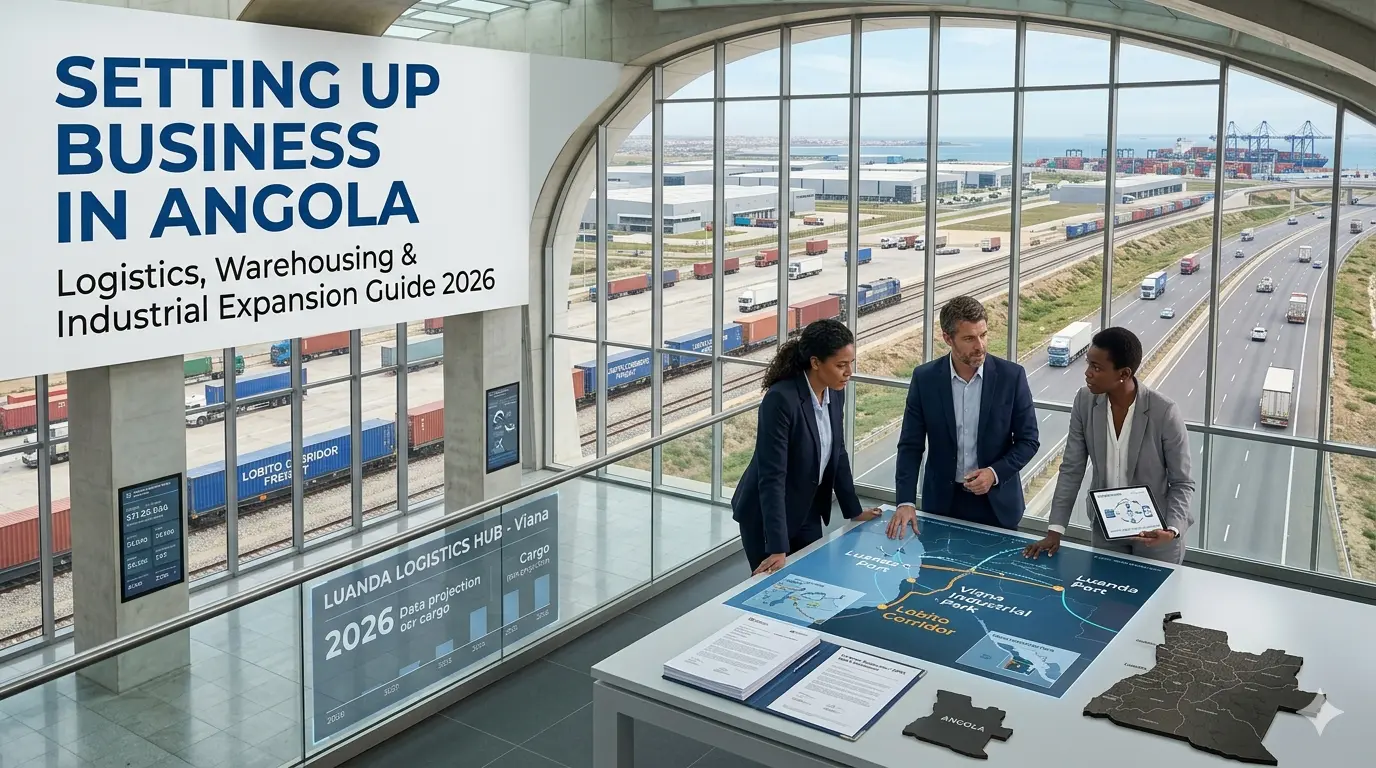
Why Angola is the Strategic Gateway for 2026
Angolas economic story in 2026 is all about diversification. While the latest state budget shows a disciplined approach to spending, the focus on growing the non-oil sector is stronger than ever. The country sits in a perfect spot on the Atlantic coast, acting as a natural entry point for the Southern African Development Community. This has made it a top choice for companies looking to reach a massive regional market.
The biggest success story recently is the Lobito Corridor. This 1,300 kilometer railway project has finally become a fully operational trade route. Backed by hundreds of millions in international financing, it connects the Port of Lobito directly to the mining heartlands of the DRC and Zambia. For any logistics company, this is more than just a train track. It is the backbone of a completely new way to move goods across Southern Africa.
Ports: Luanda and the Rise of Lobito
The Port of Luanda still handles most of the cargo coming into the country. After a major 190 million dollar upgrade to the multipurpose terminal, it is more efficient than ever. However, the real excitement is at the Port of Lobito. Thanks to the new rail link, we have seen a huge increase in transit cargo and new direct shipping routes to Asia. The arrival of major international port operators has also modernized the system, making the digital paperwork much faster than it used to be.
Warehousing: The Viana Cluster and Cold Chain Needs
If you need storage, Viana is still the place to be. In mid 2026, high quality warehouse space in the Luanda-Bengo Special Economic Zone or the nearby industrial parks costs around 5,000 to 6,000 Kwanza per square meter. These modern units are essential because they come with 24/7 security and the kind of backup generators you need for consistent operations in Luanda.
There is a massive opportunity right now in cold storage. As the local food and beverage industry grows, there simply is not enough refrigerated space to go around. Companies that can provide reliable cooling near the major logistics hubs are finding plenty of customers among local farmers and grocery chains.
Trucking: Navigating the 2026 Road Network
Moving goods by road is still the primary way things get delivered, but it can be expensive. Trucking rates currently sit around 1.20 US dollars per kilometer. This cost is a direct result of the local geography and infrastructure. While the main highways are improving, over half of the national road network is still unpaved. This means logistics managers have to stay flexible, especially during the rainy season between October and April when some inland routes become a lot more difficult.
Regulatory Setup: From AIPEX to AGT
The days of dealing with the old ANIP agency are over. Today, everything goes through AIPEX. They have created a single window for investment that makes the whole process much clearer. For most companies, you should expect the setup to take between two and four months. The tax rules for 2026 are actually quite encouraging. While the standard corporate tax is 25 percent, agricultural projects pay a reduced 10 percent rate. If you set up in the Special Economic Zone, you can even qualify for tax holidays that last up to eight years.
Frequently Asked Questions
What is the current corporate tax rate in Angola?▼
The standard rate is 25 percent. However, the 2026 budget gives a break to agricultural companies, who pay only 10 percent. Industrial projects in certain zones can also get significant tax holidays.
Which agency handles foreign investment?▼
AIPEX is the main agency for all private investment. They help with registration and are the ones who coordinate the different tax incentives available to new businesses.
What are the typical warehouse rental costs?▼
A modern, high quality space in the Viana area typically costs around 5,000 Kwanza per square meter each month. Older units might be cheaper, but they usually lack the power and security most international firms require.